(continued from part I)
* How loneliness kills? Large scale studies have shown that the stress that comes from chronic loneliness is one of the most unhealthy things we can experience as humans. It quickly starts affecting you physically. It makes you age earlier, makes cancers deadlier, makes Alzheimer’s advance faster and makes your immune system weaker. Loneliness is twice as deadly as obesity and as deadly as smoking a pack of cigarette a day.
The most dangerous thing about loneliness is that once it becomes chronic, it can become self-sustaining. When your loneliness becomes chronic your brain treats it similar to any physical disease and your brain goes into self preservation mode. It starts to see danger and hostility everywhere.

Further studies have shown that, when you’re lonely, your brain is much more alert and receptive to social signals, and it gets worse at interpreting them correctly. That is, you pay more attention to others but understand them less. To be precise, your brain starts acting weirdly, projecting neutral faces and acts as hostile and thus, makes you distrustful of others. Loneliness makes you assume others intention towards you as hostile. Because of imagining the world as more hostile, you become more self-centred to protect yourself, which can make you appear more cold, less friendly and more socially awkward than you actually are.
* What can we do about it? If loneliness has become a strong presence in your life, the first thing you can do is try to recognise the vicious cycle you are trapped in. An initial feeling of isolation leads to feelings of tension and sadness which makes you focus your attention selectively on negative interaction with others. This makes your thoughts about yourself and others more negative, which then affects your behaviour and you begin to avoid social interactions; which further leads to more feelings of isolation. This cycle gets severe and harder to escape each time.

Loneliness is often a slow process and can end in depression and in a mental state that prevents connection even when you yearn for them.
The first thing you can do to escape it is by accepting that loneliness is completely a normal feeling and that there’s nothing to be ashamed of. Literally, everybody feels lonely at some point in their life. It’s a universal human experience. You can’t eliminate or ignore a feeling and lock them away, hoping that someday they’ll disappear magically. But you can accept that you feel it and get rid of its course. You can self examine what you focus your attention and check if you are selectively concentrating in negative things. Try to check if what others said were rather neutral or even positive, and it was you who took it the wrong, or you just misunderstood their shortage of time to disinterest in you.
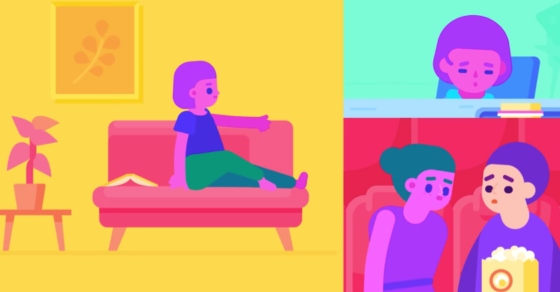
Then, there are your thoughts about the world : “Are you assuming the worst about others intentions? Do you enter a social situation and have already decided how it’ll go, before the event takes place? Do you assume others don’t want you around? Are you trying to avoid being hurt and not risking opening up?”
And if so, “Can you give others the benefit of the doubt? Can you just assume that they are not against you? Can you risk being open and vulnerable again?”
And, lastly your behaviour : “Are you avoiding opportunities to be around others? Are you looking for excuses to decline invitations? Or are you pushing others away preemptively to protect yourself? Are you acting as if you are getting attacked? Are you really looking for new connections or have you become complacent with your situation?

Ofcourse, every person and situation is unique and different, and just introspection alone, might not be enough. If you feel unable to solve your situation by yourself, please try to reach out and get professional help. It’s not a sign of weakness, but of courage.
Whether we look at loneliness as a purely individual problem that needs solving to create more personal happiness or as a public health crisis, it is something that deserves more attention. Humans have built a world that’s nothing short of amazing and yet none of the shiny things we’ve made is able to satisfy or substitute our fundamental biological need for connection. Most animals get what they need from their surroundings and we get most of our needs from each other. And we need to build our artificial human world based on that.
Let’s try something together. Let’s reach out to someone today, regardless if you feel a bit lonely or if you want to make someone else’s day better. Maybe write to a friend you haven’t spoken to in a while, call a family member who has become estranged, invite a colleague to a coffee or just go do something you are too lazy to go to or too afraid to go to. Maybe not much good will come of it, but that’s okay too. Don’t do it with much expectations. The goal is just to open up a bit of your connection muscles so that they grow stronger over time or to help others exercise them.
**Written by Saurav Baglari**

 Lost Writer
Really Good one…
Beneficial….
LikeLiked by 1 person
Means a lot
LikeLike
One that I needed the most❤
LikeLiked by 1 person